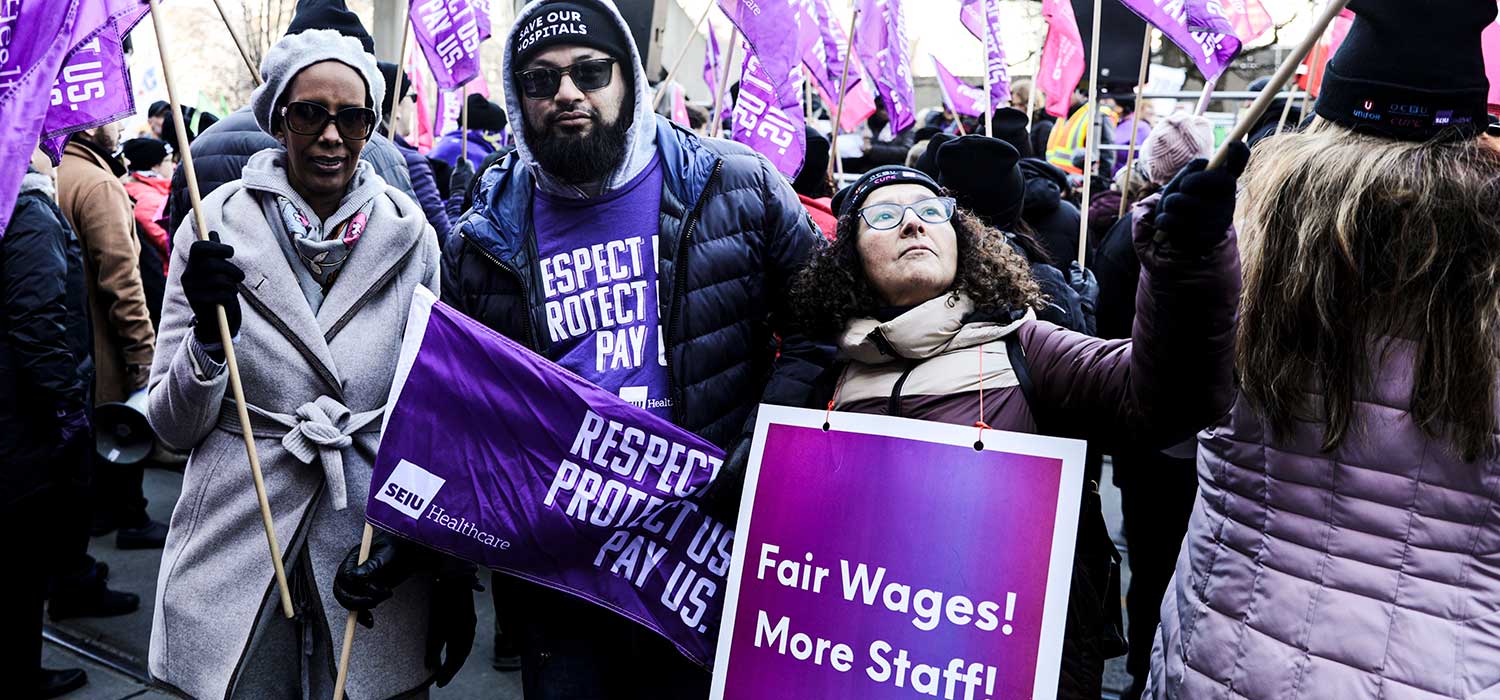

Labour Day Parade, Toronto, Sept. 5th, 2011

1dpvka.jpg


Rally to Save Healthcare! Queen's Park, Toronto, Sept. 13th, 2011, Noon

CTV Ottawa- Health care top issue for Ontario voters: poll - CTV News

http://ottawa.ctv.ca/servlet/an/local/CTVNews/20110814/ontario-election-issues-poll-110815/20110815/?hub=OttawaHome

ctvtoronto.ca Health care is the issue of greatest concern to Ontario voters in the upcoming provincial election, suggests a new poll, which also found that jobs and the economy are high on the priority list.

The Nanos Research poll -- conducted between August 10 and August 13 for CTV, The Globe and Mail and CP24 -- found that health care is the most important provincial issue of concern to 28.9 per cent of respondents, followed by jobs and the economy at 21 per cent.

While health care is still the most important issue by a wide margin, it is down from May, when 34.1 per cent of Ontarians deemed it the most important campaign issue. Meanwhile, the number of people who consider jobs and the economy to be most important has surged from 14.7 per cent in May.

Of the other issues identified as most important in the poll (May poll results in brackets):

10.5 per cent of respondents said high taxes (9.6)
8.3 per cent said education (10.9)
4.5 per cent chose the environment (3.8)
4.3 per cent chose tackling the debt and deficit (2.3)
1.1 per cent said gas prices (8.7)

When asked which of the provincial party leaders they most trust to manage specific issues, respondents did not heavily favour either Premier Dalton McGuinty or Progressive Conservative Leader Tim Hudak.

On the health care file, 33 per cent of respondents said McGuinty could most be trusted, compared to 26.5 per cent of respondents who chose Hudak. McGuinty is also considered more trustworthy on education by 33.4 per cent of respondents, compared to Hudak at 26.4 per cent. On the environment, McGuinty also bests Hudak with 26.4 per cent support compared to 21.3 per cent.

The two leaders are close on both the economy and taxes. According to the poll, 32.8 per cent said McGuinty is most trustworthy to handle the file, while 30.1 per cent said Hudak is best to steer the economy. Meanwhile, 30.3 per cent of respondents said McGuinty could most be trusted to handle taxes, while 29.2 per cent said Hudak would be most trustworthy on the file.

NDP Leader Andrea Horwath is well back in all categories. Her strongest showing is on the environment file, with more than 14 per cent of voters saying she is most trustworthy to handle the issue.

Nik Nanos, President of Nanos Research, said the results suggest Liberal attack ads aimed at Hudak have had some effect, preventing the Progressive Conservative leader from proving to voters he is trustworthy.

The attack ads from both parties may also be to blame for the fact that one in four voters said that they are undecided about which leader, or don't feel any leader, is trustworthy on any given issue.

"It speaks to the malaise that the negative ads create," Nanos said. "The negative ads don't necessarily affirm anything. They basically tear down each other."

Results released Monday evening showed that the race between the Liberals and the Progressive Conservatives has tightened since May. The poll found the Liberals are at 37.6 per cent support, putting them within five points of the Progressive Conservatives, who have 42.1 per cent support.

The August poll was a random telephone survey of 1,000 Ontarians aged 18 and older. It is considered accurate within +/- 3.1 percentage points, 19 times out of 20.

Vote for Health Care Campaign Get's Underway!

Sharleen Stewart-Dec 08-2.jpgUnion organizer Sharleen Stewart is mounting what she calls the "biggest ground campaign" ever seen in Canada ahead of Ontario's fall election.

By Jim Coyle
Feature writer
www.thestar.com/news/canada/article/1014531--union-leader-sharleen-stewart-is-bent-on-making-health-care-a-top-provincial-election-issue

To see more than 100 people in purple scrubs dancing to "Cupid Shuffle" on Yonge-Dundas Square at 8 a.m. on Friday morning was to fear Thursday night might have involved epic excess.

But no. The dancers greeting the day in Toronto's downtown core were fresh-faced and clear-eyed. They were choreographed. They were members of the Service Employees International Union.

And they were strutting their stuff to make the point -- at the end of an intriguing training session this week -- that health-care workers at the low end of the wage ladder don't intend to be shrinking violets in the provincial election come October.

Sharleen Stewart, president of SEIU Local 1 in Ontario, told the Star her union is importing tactics used by its American counterpart to help elect President Barack Obama in 2008.

The SEIU plans to mount "the biggest ground campaign" ever seen in Canada. It intends to keep the focus on health care. And it intends to defeat candidates who threaten it.


A new report released this week finds "untenable levels" of overcrowding in Ontario's hospitals. The report by the Ontario Health Coalition found that:

  • More than 18,500 hospital beds have been closed since 1990.
  • Ontario's hospital occupancy rate is 97.8%, compared to average occupancy rates of 75% for the rest of the Organization for Economic Co-operation and Development (OECD) countries.
  • Ontario is fourth last in the OECD in numbers of hospital beds per person, followed only by Turkey, Chile and Mexico
  • Ontario has the fewest hospital beds per person of any province in Canada.Hospital bed cuts have not been offset by increases in care outside of hospitals. Approximately 10,000 people are on wait lists for home care in Ontario and more than 23,000 people are on wait lists for long term care homes.
  • Alternate Level of Care patients number 4,093 across Ontario, but 911 of these patients are waiting for care in hospital. Overcrowded emergency departments
The consequences of overcrowded hospitals include:

  • Cancelled surgeries
  • Coercive tactics used to force patients out of hospital against their choice
  • Inappropriate staffing ratios
  • Increased hospital-acquired infections
  • Poorer health outcomes and increased mortality rates
Read the full report here.

Do the Healthcare Hustle!

flashmob9.JPGNearly 300 SEIU members put on their dancing shoes and did the Healthcare hustle at Yonge Dundas Square on Friday June 24 to raise awareness about healthcare issues in the upcoming provincial election. Click here to see the video. The group even got the media's attention, with Citytv's Breakfast Television and the Toronto Star covering the event.

Dressed up in purple scrubs, 300 members danced in unison together to fight for a stronger healthcare system.

SEIU President, Sharleen Stewart, said SEIU members do the hustle all day long at work, so that's why they're doing it in the square this morning. "Our candidate for this election is healthcare," she said. She said this demonstration is about bringing awareness to the public about the importance of healthcare in Ontario.

Kevin Drum, who blogs for Mother Jones, the venerable muckraking magazine in San Francisco, has an interesting column about the just released charts from the International Federation of Health Plans - the Canadian Blue Cross are members - that compare health costs across member countries. So, what does the date show us?

That the U.S. has the highest health costs across the boards, for every procedure. The Mother Jones column singles out the cost of hip replacements to demonstrate how the rapid availability of the procedure in the U.S. seems to be motivated by how much money there is to be made. The average hip replacement in the U.S. costs $34, 454. "Keep this in mind the next time someone starts going on about how you never have to wait in line for a hip replacement in America. It's not because our healthcare system is super efficient, it's because doctors are super eager to perform them," writes Drum.

In fact Canada is in the bottom percentile in nearly every chart - and never places higher than the middle for health care costs. The other countries in the bottom (with the lowest costs) all have some form of socialized medicine while the countries at the top (with the most costs) all have private health delivery.

You can view the charts here, so remember this the next time someone makes an argument for private surgical clinics or CT scans in Canada.

Canada Health Act under Attack

"Requiring patients to pay up front, and having them seek reimbursement from the covering province or territory, still satisfies the portability criterion of the act, as long as access to a medically necessary insured service is not denied due to the patient's inability to pay," said Tim Vail, speaking for Health Minister Leona Aglukkaq in a Globe and Mail article about the unequal application of the Canada Health Act between provinces, in this case Quebec and Ontario. 

The story in the Globe begins by mentioning that the Act, as it is presently, is only 26 years old - and it is - but you can't help but wonder given the direction of the rest of the Globe's coverage this week of Canada's health system if the idea here is that 'it's not that old'. That it's not so intractable that it can't be changed, scrapped for something different. What private advocates don't bring up is what it was like for a majority of Canadians prior to the introduction of universal health care - the farmer on the prairies, the dockworker in Halifax, the trapper in Yellowknife, the schoolteacher in Toronto.

Now the focus seems to be of time pressed Canadian professionals who need orthoscopic surgeries and want to speed up delivery (an understandable and universal feeling) and have the money to pay for it. Not the situation that led to the introduction of universal health care for Canadians or the situation that persists still for the majority. Allowing two-tier healthcare for those who can afford to pay will enshrine a two-tier society where there will be those who can afford to be healthy and those who can't.

What doesn't get communicated is that two-tier users and practitioners continue to draw on public resources while benefitting from their ability to pay for upscale service. Though not at all apparent in the soft toned feature of B.C. private clinic operator Dr. Brian Day in the Globe this week, Dr. Day is clear in a recent story in the Tyee how he double-bills his patients for the surgeries he offers. First Day's Cambie Surgical Centre bills the patient and then the province for the same procedure. The private U.S. health providers - as well as those homegrown - lining up to offer services to Canadians do so expecting the public system to pay. Remove the public purse and their bottom line suffers.

Implicit in the Globe series - and in much of the arguments made by two-tier advocates - is the idea that somehow private care is different, as if a diagnosis from a doctor paid out of pocket has access to greater insight, better skills and unique medical knowledge not possible from a medically trained professional working within the public health system. It's a subtle argument employed by public relations specialists meant to shift public opinion imperceptibly to a certain point-of-view, in this case that private care is better and more efficient, and the Globe with this series has bought right into it.

TORONTO, Nov. 9 /CNW/ - Hospital CEOs have been ordered to invest in nurses and frontline staff by an independent arbitrator who found Queen's Park's call for a compensation freeze unreasonable, in a ruling that renders the policy null and void in the health sector.

The decision published today means about 17,000 nurses and staff at more than 60 hospital sites will see their compensation rise in-line with inflation, while CEOs were also given a deadline of 60 days to start taking steps to address nursing shortages.

"The ruling is balanced and puts the interests of patients first," said Sharleen Stewart, head of the Service Employees International Union (SEIU), which represents more than 50,000 healthcare workers in Ontario.

Hospital CEOs have been withholding inflation increases dating back more than a year from frontline staff, while paying themselves up to $830,000 and spending millions on consultants through sole-source contracts that a recent audit revealed as wasteful and potentially fraudulent.

"Frontline staff are getting by on less than 5% of what some of these CEOs are paying themselves. Yet these executives think nothing of pushing a paramedic or nurse to breaking point while indulging in lavish spending on perks for consultants and bonuses for themselves. This is simply unfair. The hypocrisy is staggering," said Ms. Stewart.

Ontario Arbitrator Kevin Burkett ruled the CEOs' position unreasonable and found the government's goal of a wage freeze for nurses and teachers was not binding. The government had "spoken politically" but "not legally" or "legislatively", he said. Legislation is not a viable option for Ontario following a Supreme Court decision that ruled a similar move by British Columbia violated the Charter of Rights and Freedoms.

Marty Parker, head of the Ontario Hospital Workers Council, said: "The wage freeze is dead. The only way the government is going to reach its budget targets now is by delaying $2-billion in handouts to corporations. We just can't afford to pay for anymore corporate tax cuts."

The arbitrator also ordered CEOs to take steps towards making better use of Registered Practical Nurses, and ensuring patient safety is part of the professional responsibility of all nursing staff. "This is a call to action to make sure patients get the right nurse at the right time," said Carol McDowell, a Registered Practical Nurse in St. Catharines and head of SEIU's Nursing Division.

The arbitrator's ruling means SEIU will be the lead union in the next round of negotiations with CEOs in the hospital sector, with talks starting early in 2011 with a focus on capping runaway CEO pay and making public healthcare stronger and more sustainable.

The wage freeze has now been overturned in the hospital sector and nursing home sector, leaving only one major part of the health system to address: home care. Cuts are seen as untenable in the home care sector because of acute shortages and high turnover rates among staff who are already living below the poverty line, and because the sector is still struggling to live up to its promise as a solution to the pressures of an aging population.

-30-


For further information:
Pat Chastang
SEIU Canada
(416) 709- 0501
chastangp@seiu.ca

Social Media

Join the Campaign

Say "NO!" to two-tier healthcare Participate

Cap hospital CEO salaries now Participate

Quality Home Care
Participate

Social Media

Join the Campaign

Say "NO!" to two-tier healthcare Participate

Cap hospital CEO salaries now Participate

Quality Home Care
Participate